

Deepfake detection software scans video, audio, images, and text for signs of AI-generated manipulation before a cloned voice or a fabricated video reaches your help desk, your finance team, or your customers. This guide ranks the deepfake detection platforms worth evaluating in 2026 and shows exactly where detection stops and identity-layer defense has to take over.
- Reality Defender is the best overall deepfake detection software in 2026 for enterprises that need video, audio, image, and text coverage in one platform.
- Pindrop wins for voice deepfake detection inside contact centers and IVR fraud screening.
- Intel FakeCatcher is the pick for real-time video verification during live calls and virtual meetings.
- Sensity AI fits brand protection teams watching for executive impersonation across public channels.
- No detection tool stops what happens after a deepfake tricks an employee into resetting a password.
Why this matters
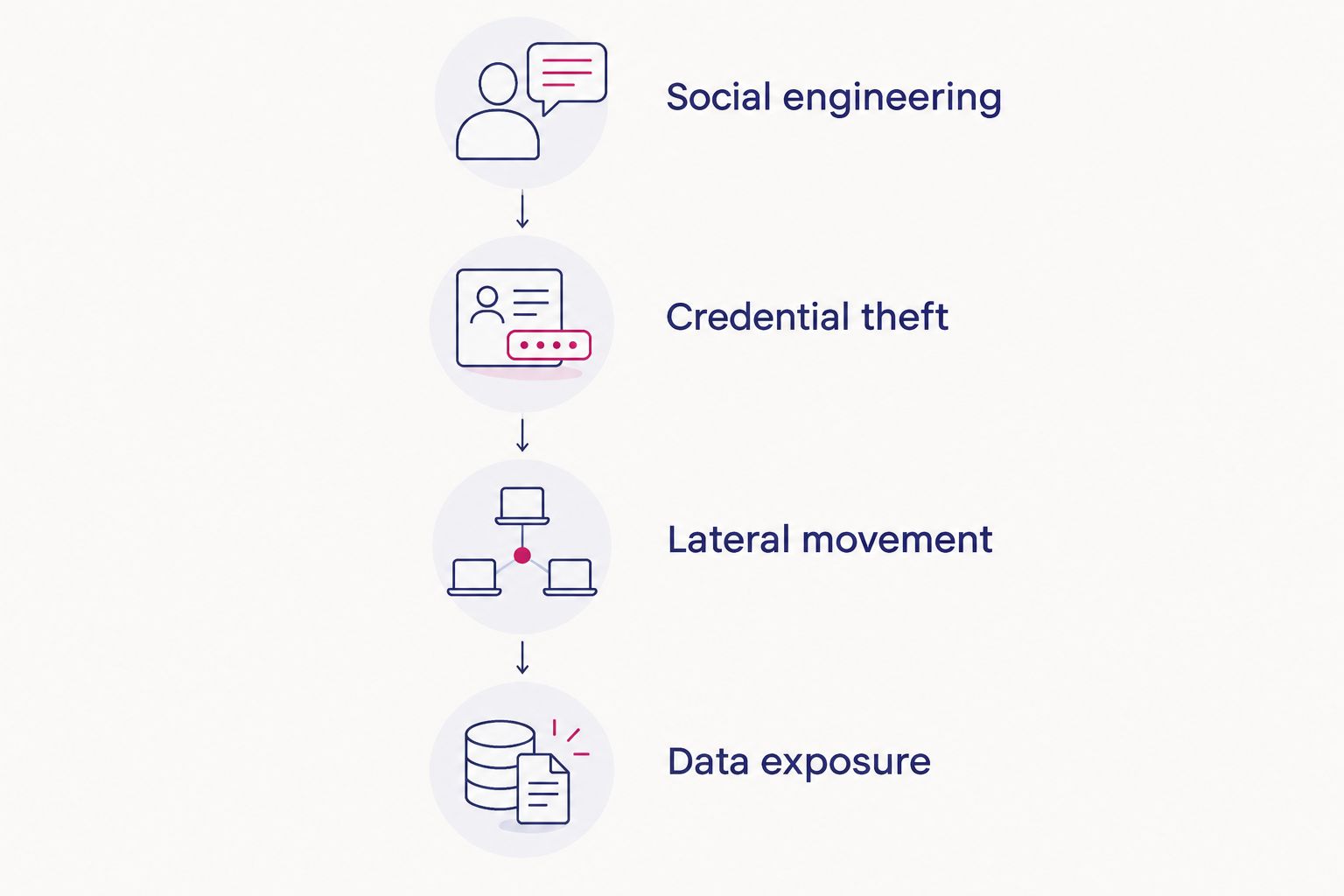
Deepfake fraud in 2026 isn't a novelty problem a security team monitors from a distance. Attackers use cloned executive voices to push wire transfers, fabricated video calls to pass identity checks, and synthetic audio to trigger help desk password resets. Deepfake detection software catches the media; it says nothing about what happens to the account once the fake has already done its job. SecFolio treats that gap as a single attack path: external exposure, credential theft, lateral movement, and data exposure, in that order.
A deepfake rarely stays a media-authenticity problem for long. Once a cloned voice convinces a help desk agent to reset a password, the incident becomes a credential problem, and credential problems become lateral movement problems inside minutes. That's why detection tools and identity controls have to be read together, not ranked against each other. Deepfake-driven business email compromise through identity controls usually succeeds or fails at the authentication step, not the detection step.
What makes the best deepfake detection software
- Modality coverage — video, audio, image, and text analysis in one platform instead of four separate vendor contracts
- Real-time latency — flags a fake mid-call, not three hours after the wire transfer clears
- Enterprise integration — API and SIEM/SOAR hooks so a flag becomes a ticket, not an unread email
- Explainability — a confidence score and a stated reason, so analysts can override false positives without guessing
- Deployment model — cloud API, on-prem, or hybrid depending on data residency requirements
- Threat intelligence breadth — continuous monitoring of public channels, not just inbound files
At a glance
| Tool | Best for | Standout feature | Key limitation |
|---|---|---|---|
| Reality Defender | Enterprise multimodal detection | Single API spanning video, audio, image, and text | Newer vendor; enterprise references are still thin |
| Pindrop | Voice deepfake detection in contact centers | Voice biometrics tuned specifically for call center fraud | Narrow scope outside the voice channel |
| Intel FakeCatcher | Real-time video verification | Analyzes biometric signals inside video for live detection | Covers video only, no audio or text layer |
| Sensity AI | Executive impersonation monitoring | Continuous scanning of public web and social channels | Built for monitoring, not SOC case management |
| Hive Moderation | Platform-scale content moderation | High-throughput API built for user-generated content volume | Tuned for moderation, not internal fraud investigation |
1. Reality Defender: best deepfake detection software for enterprise-wide multimodal coverage
Reality Defender runs video, audio, image, and text through a single detection API, which matters when an attack arrives as a voicemail one week and a video call the next. It's built for security teams that want one integration point rather than stitching together separate vendors per media type.
Reality Defender pros:
- Covers four media types from one API
- Built for enterprise SOC and incident-response workflows
- Designed for API-first integration into existing ticketing systems
Reality Defender cons:
- Smaller public enterprise deployment history than legacy voice-fraud vendors
- Multimodal coverage adds setup complexity compared to single-channel tools
Best for: enterprises consolidating deepfake detection into one contract instead of four. Verdict: Buy if your exposure spans video, audio, and document fraud together.
2. Pindrop: best deepfake detection software for voice fraud in contact centers
Pindrop built its name on voice authentication and fraud detection for banks and call centers, and its deepfake detection layer extends that same voice-biometrics engine. It's the strongest option when the attack surface is the phone channel: IVR, help desk, and call center agents.
Pindrop pros:
- Purpose-built for high call-volume environments
- Strong fit for financial services and help desk fraud screening
- Mature voice-biometrics base predating the deepfake-specific feature set
Pindrop cons:
- No meaningful coverage for video or image deepfakes
- Overkill for organizations without high call-center volume
Best for: banks, insurers, and any organization whose help desk takes password-reset calls all day. Verdict: Buy for voice-channel fraud specifically.
3. Intel FakeCatcher: best deepfake detection software for real-time video verification
Intel FakeCatcher analyzes biometric signals captured in video frames to flag synthetic faces in real time, a different approach from tools that compare pixel artifacts after the fact. It's suited to live settings — video interviews, virtual board meetings, identity verification calls — where a flag needs to land before the call ends.
Intel FakeCatcher pros:
- Real-time analysis designed for live video sessions
- Biometric-signal approach differs from standard artifact-detection methods
- Backed by Intel's ongoing research investment in the technology
Intel FakeCatcher cons:
- Video-only; no audio, image, or text detection
- Less proven in production SOC environments than purpose-built fraud platforms
Best for: teams verifying identity on live video calls, not scanning a backlog of files. Verdict: Hold until it ships alongside an audio detection layer for full call coverage.
4. Sensity AI: best deepfake detection software for executive impersonation monitoring
Sensity AI watches public channels — social platforms, news, forums — for manipulated media involving a company's executives or brand, rather than scanning files submitted internally. It functions more like a threat-intelligence feed than a SOC tool.
Sensity AI pros:
- Built for continuous external monitoring, not one-off file checks
- Useful for brand protection and executive-risk teams
- Surfaces impersonation attempts before they reach an employee's inbox
Sensity AI cons:
- Not designed for internal case management or ticket workflows
- Monitoring scope depends on which channels are covered
Best for: communications and brand-protection teams tracking executive impersonation. Verdict: Buy as a monitoring layer, not a SOC replacement.
5. Hive Moderation: best deepfake detection software for platform-scale content moderation
Hive Moderation's API is built to classify high volumes of user-generated content, deepfakes included, for platforms that need moderation at scale rather than forensic investigation of a single incident.
Hive Moderation pros:
- Handles high-throughput content streams
- API-first, suited to platforms and marketplaces
- Broader content-moderation feature set beyond deepfakes alone
Hive Moderation cons:
- Tuned for moderation decisions, not fraud-investigation detail
- Less relevant for enterprises without user-generated content exposure
Best for: platforms and marketplaces moderating content at volume. Verdict: Skip unless user-generated content is part of your business model.
How we ranked
Each tool was weighed against the six criteria above: modality coverage, real-time latency, enterprise integration, explainability, deployment flexibility, and monitoring breadth. Reality Defender led on coverage and integration; Pindrop and Intel FakeCatcher won narrower categories by doing one channel better than any generalist platform; Sensity AI and Hive Moderation serve adjacent use cases — monitoring and moderation — rather than internal SOC detection.
Which deepfake detection software should you choose?
Reality Defender is the default pick for 2026 if your organization faces deepfake risk across more than one channel — video calls, voicemail, and document fraud together. Pick Pindrop if the phone channel is your actual exposure; pick Intel FakeCatcher if live video verification is the gap. Whichever tool you choose, pair it with identity controls, because detection flags the fake and stops there — it doesn't stop a help desk agent from resetting a password for a cloned voice. That's a separate question, and whether passwordless authentication can be hacked is worth answering before you lean on detection alone.
Close the identity gap behind deepfakes
See how identity threat detection catches what deepfake tools miss.
FAQ
What’s the best deepfake detection software in 2026?
Reality Defender is the best overall deepfake detection software in 2026 for enterprises needing video, audio, image, and text coverage in one platform. Pindrop and Intel FakeCatcher win narrower categories — voice and live video — by specializing in one channel.
Can deepfake detection software stop a CEO fraud phone call?
It can flag the call as synthetic in real time if the tool covers voice, but it doesn’t stop the wire transfer or password reset that follows. That step depends on identity controls, not detection software.
Is Pindrop better than Reality Defender for voice fraud?
Pindrop’s voice-biometrics engine is purpose-built for call centers and outperforms generalist tools on that one channel. Reality Defender covers more media types but isn’t a voice-fraud specialist.
How much does deepfake detection software cost?
Most vendors in this category don’t publish list pricing; costs typically scale with call or scan volume. Request a quote based on your actual channel exposure rather than comparing list prices.
Does deepfake detection replace multi-factor authentication?
No. Detection flags manipulated media; it doesn’t authenticate the person on the other end of a call or reset request. MFA and passwordless controls handle that separately.
Can a deepfake video fool a facial recognition login?
Some synthetic video has defeated weaker facial recognition systems, which is why real-time tools like Intel FakeCatcher analyze biometric signals rather than surface appearance alone. Stronger identity verification reduces this risk independent of detection software.
How fast do deepfake detection tools analyze a video call?
Real-time tools like Intel FakeCatcher are built to flag a call while it’s still in progress. Batch-oriented tools analyze files after the fact, which is too slow for live fraud attempts.
What happens after deepfake detection software flags a fake?
The flag should route into a ticketing or SIEM/SOAR workflow for an analyst to review and act on. A flag with no downstream process just sits in a dashboard no one checks.
One last thing
The costliest 2026 deepfake incidents rarely start with a boardroom video. They start with a cloned voice calling an internal help desk for a routine password reset — a scenario detection software may never see, because the call never gets flagged as synthetic before the reset goes through. Detection buys you a warning; identity controls decide whether that warning matters.
Related guides
- How to detect MFA fatigue attacks before they succeed
- How to detect session hijacking in identity-based attacks


