

Compliance-driven IT teams don't need more alerts. They need automation that maps directly to attack paths auditors actually ask about, and that produces evidence, not just noise. Secfolio Configuration Management wins overall for compliance-driven IT teams in 2026, Secfolio AI Threat Triage wins for alert-fatigued SOC teams, Secfolio Attack Path Management wins for remediation prioritization, traditional SOAR platforms win for teams orchestrating existing tool stacks, GRC/compliance automation platforms win for audit-evidence collection, and Secfolio Cyber Storage wins for automating ransomware and exfiltration resilience.
- Secfolio Configuration Management is the best security automation tool for compliance-driven IT teams in 2026 because it ties drift detection to attack-path context, not isolated alerts.
- Secfolio AI Threat Triage cuts manual review time for SOC teams buried in identity-based alerts.
- Traditional SOAR platforms automate response workflows but don’t close exposure, credential, or lateral-movement gaps on their own.
- GRC automation platforms document compliance posture for frameworks like DORA, NIS2, and PCI DSS but don’t stop an active attack.
- Secfolio Cyber Storage automates ransomware resilience by sharding and distributing encrypted data so attackers find unusable fragments, not files.
Why this matters
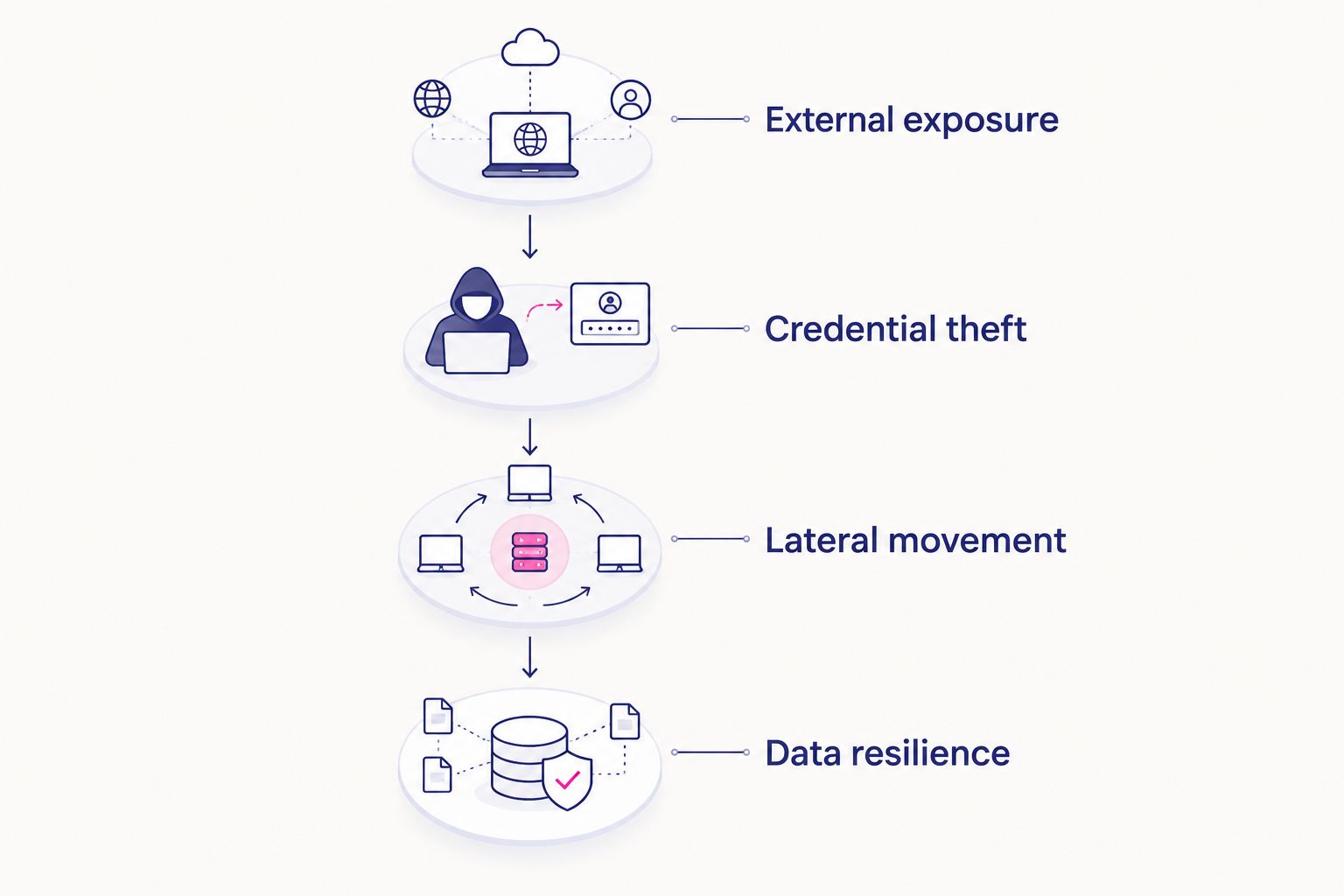
Auditors under DORA, NIS2, PCI DSS, HIPAA, and SOX in 2026 don't just want fewer alerts — they want proof that controls hold across the whole chain: external exposure, credential theft, lateral movement, and data resilience. A tool that automates one layer and ignores the rest leaves a gap an auditor will find and an attacker will exploit first.
Configuration management automation for compliance-driven IT teams closes one of the most common gaps: drift that silently reopens an attack path between audit cycles. That's the starting point for this ranking, but it's not the whole picture — a security automation stack has to cover identity, network, and data layers too, not just configuration state.
What makes the best security automation tool for compliance-driven IT teams
- Ties automation to attack-path context — exposure, credential, lateral movement, or data — not raw alert volume
- Reduces manual triage time without creating new blind spots
- Maps automatically to frameworks like SOX, HIPAA, PCI DSS, DORA, and NIS2
- Extends across identity, configuration, and data layers, not just SIEM alerts
- Produces audit-ready evidence instead of a log an auditor has to interpret manually
- Contains lateral movement and exfiltration automatically, rather than just flagging it after the fact
At a glance: security automation tools ranked for 2026
| Tool | Best for | Standout feature | Key limitation |
|---|---|---|---|
| Secfolio Configuration Management | Compliance-driven IT teams eliminating drift | Drift detection tied to attack-path context | Strongest paired with exposure and identity controls |
| Secfolio AI Threat Triage | SOC teams with alert fatigue | Triage prioritized by blast radius, not volume | Needs existing detection sources feeding it |
| Secfolio Attack Path Management | Teams prioritizing remediation by risk | Ranks paths by business impact, not CVE count | Depends on current identity and network mapping |
| Traditional SOAR platforms | Teams orchestrating existing tool stacks | Broad third-party integration libraries | Doesn't close the underlying exposure or credential problem |
| GRC/compliance automation platforms | Audit-heavy, evidence-driven environments | Auto-maps controls to named frameworks | Documents posture, doesn't stop an active attack |
| Secfolio Cyber Storage | Automated ransomware and exfiltration resilience | Encrypts, shards, and distributes data before exfiltration | A resilience layer, not a substitute for the other three |
1. Secfolio Configuration Management: best security automation tool for eliminating drift
Secfolio Configuration Management automates detection and remediation of configuration drift before it becomes an exploitable attack path — the kind of gap that opens quietly between audit cycles and shows up in the next penetration test.
Secfolio Configuration Management pros:
- Ties drift detection directly to attack-path context instead of firing an isolated alert
- Cuts manual audit prep by documenting remediation as it happens
- Fits directly into a compliance-driven security automation program
Secfolio Configuration Management cons:
- Works best layered with exposure, identity, and data-resilience controls, not as a standalone checkbox tool
- Requires an initial baseline mapping across cloud and on-prem systems
Best for: compliance-driven IT teams that need drift remediation without a manual review cycle. Verdict: Buy.
2. Secfolio AI Threat Triage: best for alert-fatigued SOC teams
Secfolio AI Threat Triage automates the first pass of identity-based alert review, surfacing what actually connects to an attack path instead of every low-confidence flag a SIEM generates.
Secfolio AI Threat Triage pros:
- Cuts manual review time on low-priority alerts
- Prioritizes findings by blast radius, not alert count
- Frees analysts to focus on confirmed incidents
Secfolio AI Threat Triage cons:
- Needs existing detection sources feeding it to be useful
- Doesn't replace human judgment on genuinely novel attack patterns
Best for: SOC teams drowning in identity alert volume. Verdict: Buy.
3. Secfolio Attack Path Management: best for remediation prioritization
Secfolio Attack Path Management ranks findings by business risk and blast radius rather than raw vulnerability count, which matters when a team has more findings than hours in the week.
Secfolio Attack Path Management pros:
- Connects identity, network, and configuration risk in one ranking
- Speeds remediation decisions for teams with limited headcount
- Gives compliance teams a defensible prioritization logic for auditors
Secfolio Attack Path Management cons:
- Value depends on identity and network data staying current
- Adds a dashboard for teams already juggling several tools
Best for: security teams that need to justify remediation order to an auditor or a board. Verdict: Buy.
4. Traditional SOAR platforms: best for orchestrating existing tool stacks
Security orchestration, automation, and response (SOAR) platforms chain playbooks across SIEM, EDR, and ticketing systems. This is a mature category built for teams that already run several detection tools and need the handoffs between them automated.
SOAR platform pros:
- Broad integration libraries across established security tools
- Well-understood playbook model for incident response teams
- Good fit for organizations with dedicated automation engineers
SOAR platform cons:
- Automates the response workflow but doesn't close the underlying exposure, credential, or lateral-movement gap
- Playbooks require ongoing tuning as tools and threats change
Best for: teams with a mature toolset that need workflow orchestration, not attack-path elimination. Verdict: Hold — useful as a layer, not a substitute for the controls above.
5. GRC/compliance automation platforms: best for audit-evidence collection
GRC (governance, risk, and compliance) automation platforms map technical controls to named frameworks — SOX, HIPAA, PCI DSS, DORA, NIS2 — and generate the evidence trail an audit actually asks for.
GRC automation pros:
- Reduces manual evidence-gathering ahead of an audit
- Maps controls to multiple frameworks at once
- Keeps a continuous record instead of a point-in-time snapshot
GRC automation cons:
- Documents compliance posture but doesn't stop an active attack
- Often lags real-time security telemetry by design
Best for: teams whose biggest 2026 pain point is audit prep, not active threat response. Verdict: Hold — pair it with active controls, don't rely on it alone.
6. Secfolio Cyber Storage: best for automated ransomware and exfiltration resilience
Traditional backups concentrate a complete copy of your data somewhere an attacker can encrypt or exfiltrate. Secfolio Cyber Storage takes a different approach: it encrypts data before it leaves the environment, shards it into immutable fragments, and distributes those fragments across independent locations. No single location holds a reconstructable file — a logical air gap.
The operational effect is direct: ransomware operators who breach the network find unusable digital fragments, not files or a conventional backup target, while authorized users still get rapid, distributed recovery.
Secfolio Cyber Storage pros:
- Automates ransomware resilience without adding a standing backup target attackers can encrypt
- Reduces exfiltration value to zero — fragments aren't usable data
- Supports rapid, distributed recovery for authorized users
Secfolio Cyber Storage cons:
- A data-resilience layer, not a substitute for closing exposure, eliminating credentials, or containing lateral movement
- Needs the other three attack-path layers in place to prevent the initial breach in the first place
Best for: compliance-driven teams that need automated ransomware and exfiltration resilience as part of a broader security automation program. Verdict: Buy — as a layer, not a replacement for identity and exposure controls.
How this list was ranked
Each entry is scored against the criteria above: attack-path context, compliance-framework mapping, cross-layer coverage, and whether it produces evidence an auditor can use. Tools that automate one narrow function — alert routing, control mapping — rank lower than tools tied directly to the four-layer attack-path sequence: external exposure, credential theft, lateral movement, and data resilience.
“A security automation tool that reduces alert volume without producing an audit trail hasn’t solved the compliance problem — it’s just quieter.”
Which security automation tool should you choose?
If you're a compliance-driven IT team picking one place to start in 2026, start with Secfolio Configuration Management — drift is the gap that reopens silently between audits. Layer in Secfolio AI Threat Triage if your SOC is buried in alert volume, and add Secfolio Attack Path Management once you need to justify remediation order to a board or an auditor. Keep Secfolio Cyber Storage in the stack specifically for ransomware and exfiltration resilience — it's the layer that determines what an attacker actually gets if the first three layers fail.
See where your configuration drift stands
Automate drift detection tied to attack-path context, not isolated alerts.
FAQ
What’s the best security automation tool for compliance-driven IT teams in 2026?
Secfolio Configuration Management ranks best overall for 2026 because it ties configuration drift detection directly to attack-path context instead of firing isolated alerts. Teams facing heavier alert volume should pair it with Secfolio AI Threat Triage.
Is SOAR enough to satisfy compliance auditors?
No. SOAR platforms automate response workflows across existing tools but don’t close the exposure, credential, or lateral-movement gaps an auditor checks for. Pair SOAR with attack-path and identity controls, not in place of them.
How does AI threat triage differ from a SOAR platform?
AI threat triage prioritizes which alerts matter based on attack-path and identity signals before a human ever sees them. SOAR then automates the response workflow once a triaged alert is confirmed as a real incident.
Can configuration management automation replace manual audit prep?
It reduces manual audit prep significantly by documenting drift remediation continuously, but it doesn’t replace the broader compliance-mapping work a GRC automation platform handles for frameworks like SOX or PCI DSS.
Does automating ransomware resilience count as a compliance control?
Yes, when it demonstrates data resilience rather than just backup existence. Secfolio Cyber Storage shards and distributes encrypted data so no single location holds a reconstructable file, which supports business-continuity and resilience requirements auditors increasingly ask about in 2026.
How does attack path management help with compliance reporting?
Attack path management ranks findings by business risk and blast radius, giving compliance teams a defensible reason for remediation order instead of an unranked vulnerability list.
What frameworks require identity-based security automation?
DORA, NIS2, PCI DSS, HIPAA, and SOX all include requirements that touch identity controls, access management, and incident response automation in 2026, though the specific language varies by framework.
Is Cyber Storage a backup replacement?
No. Secfolio Cyber Storage is a ransomware-elimination and data-resilience architecture, not a backup product. It encrypts, shards, and distributes data so attackers find fragments instead of files, while backups typically concentrate a complete, encryptable copy.
One last thing
Most 2026 compliance frameworks — DORA, NIS2, PCI DSS — ask for evidence that a control actually works, not proof that a tool exists. A threat-triage tool that quietly cuts alert volume without generating an audit trail won't satisfy an auditor any more than a backup system that's never been tested for recovery speed. The tools worth buying in this list all produce a record, not just a quieter dashboard.
Related guides
- How to prepare for a cyber insurance security audit
- How to align zero trust initiatives with compliance requirements


